

June 1, 2026
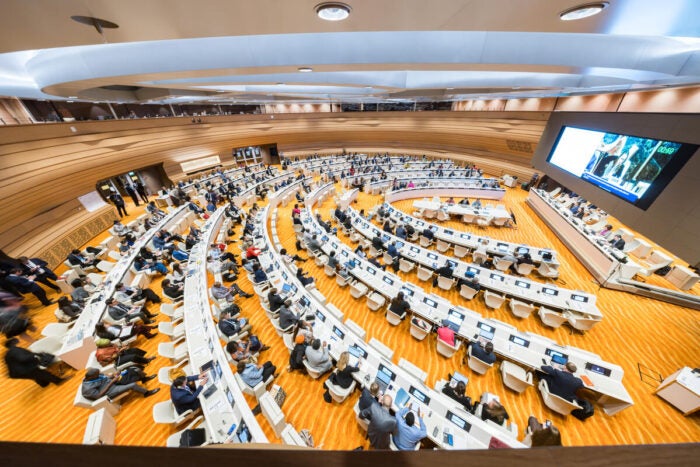
The World Health Organization in Geneva.
May 31, 2026
To: The President, the Secretary of State, and the Secretary of the Department of Health and Human Services
Subject: Urgent Concern Regarding the Proposed Relocation of US Citizens with Ebola Exposure to Kenya
Dear Mr. President, Secretaries,
We write to you today to express our profound concern regarding the reported plan to transport US citizens with possible or confirmed Ebola exposure to Kenya for observation and treatment, rather than providing care within the United States. As a coalition of epidemiologists, bioethicists, global and public health law scholars, civil liberties lawyers, medical professionals, and public health practitioners we feel it is our duty to warn you of the dangers of this approach. We recognize the urgency of containing the Ebola outbreak in Central Africa. With more than 1,000 suspected cases and more than 200 deaths recorded in just eleven days, the region faces a catastrophic health emergency; these figures are likely a considerable underestimate. The strategy of quarantining at-risk US citizens at a new facility in a foreign nation poses a threat to US health security and represents a fundamental breach of the government’s duty of care and the constitutional right of US citizens to return home.
President Trump, during his first term, successfully contained the 2018–2020 Ebola outbreak in the Democratic Republic of the Congo. His leadership delivered robust international support paired with rigorous domestic monitoring and transparent communication, demonstrating that preventing transmission on US soil can—and must—be achieved through evidence-based public health actions and by supporting the international response. The US already has a dedicated system, built and sustained at taxpayer expense, to manage public health threats.
The current proposal to deny entry to US citizens potentially exposed to Ebola conflates travel restrictions with medical necessity and disrupts outbreak response. From a medical standpoint, this approach introduces a dramatic increase in risk. Quarantining US citizens outside US jurisdiction complicates contact tracing, legal oversight, and the provision of consistent, high-quality medical care. Ebola is a complex and lethal disease. US citizens deserve access to specialized care in purpose-built state-of-the-art facilities in the United States.
US taxpayers have invested more than a billion dollars to build a network of biocontainment units in major hospitals across the country. These are intensive care units that are engineered to provide maximum biocontainment coupled with the highest standard of care. They require years to design and build and extensively trained staff to safely execute complex clinical interventions without risking self-exposure. The safety record is clear: zero onward transmission to healthcare workers has occurred in these units. Every Ebola patient treated in a US unit survived due to the heroic efforts of the highly trained clinical care teams treating them. In the proposed Kenyan facility, US citizens would be in a makeshift facility that almost certainly cannot provide a level of biocontainment or security comparable to that of a US unit. It would be staffed by personnel with only minimal training, which is insufficient for ensuring robust infection control, adequate biosafety and biosecurity, and high-quality care.
Legally, US citizens have an unqualified constitutional right to enter the United States. Ethically, by designating foreign soil as a quarantine zone our government abdicates its responsibility to protect its own citizens. Doing so is not necessary for a disease like Ebola, for which we have well-established, effective methods for mitigating transmission risk. It sets a dangerous precedent that the human rights of US citizens are contingent upon geography and political expediency. This strategy also places the US Public Health Service personnel deployed to staff the facility in Kenya at undue risk. For the first responders who answer the call to serve their country, we have an obligation to do everything in our power to keep them safe and ensure they have access to the best medical care available. We must implement plans that maximize success and impact while actively mitigating risks to those willing to put their lives on the line—a goal best achieved by monitoring US citizens returning from Ebola-affected countries within the United States.
We urge the Administration to immediately halt the implementation of this plan. Instead, we call for the activation of a comprehensive public health response in the affected region and domestically. This response must include treating every exposed citizen with the same standard of care, regardless of their location, without denying US citizens access to the world-class facilities their tax dollars funded. Public trust is the bedrock of effective infectious disease response. Forcing citizens into risky, potentially unlawful situations abroad rather than bringing them home to heal risks undermining that trust and worsening the very crisis we seek to contain.
We stand ready to assist in formulating a strategy that prioritizes national security, upholds the law, and respects human dignity.
Sincerely,
Signatories:
Lawrence O. Gostin, Distinguished Professor of Global Health Law and Director, WHO Center on Global Health Law
Michele Goodwin, Faculty Director, O’Neill Institute for National and Global Health Law at Georgetown Law School
Kaci Hickox, Nurse Epidemiologist and Infection Preventionist ⋅ Norman Siegel, Civil Liberties Lawyer
Steve Hyman, Civil Liberties Lawyer
Angela L. Rasmussen, PhD, Virologist, University of Saskatchewan and Science Chair, Save America Movement
Gregg Gonsalves, PhD, FIDSA, Infectious Disease Epidemiologist, Associate Professor, Yale School of Public Health and Associate Professor (adjunct), Yale Law School
Fiona Havers, MD, MHS, FIDSA, Infectious Diseases Physician
Gigi Kwik Gronvall, PhD, Professor, Johns Hopkins Bloomberg School of Public Health
Dorit R. Reiss, Professor of Law, James Edgar Hervey Chair in Litigation, UC Law San Francisco
Demetre C Daskalakis MD MPH, Former Director, National Center for Immunization and Respiratory Diseases, CDC
Jessica Malaty Rivera, MS, Infectious Disease Epidemiologist, Executive Director, Infodemiology Initiative, PGP
Kristian Andersen, PhD, Evolutionary Virologist, Professor, Scripps Research Institute
Taylor Nichols, MD MS, Emergency Medicine and Addiction Medicine Physician, CEO, Transitions Addiction Medicine Group
Krutika Kuppalli, MD, FIDSA, Infectious Diseases Physician
Gavin Yamey, MD, MPH, MA, Hymowitz Family Professor of Global Health and Professor of Public Policy, Duke University
Contact: Norman Siegel 347-907-0867|Steve Hyman 212-448-6228|Kaci Hickox 410-635-0053