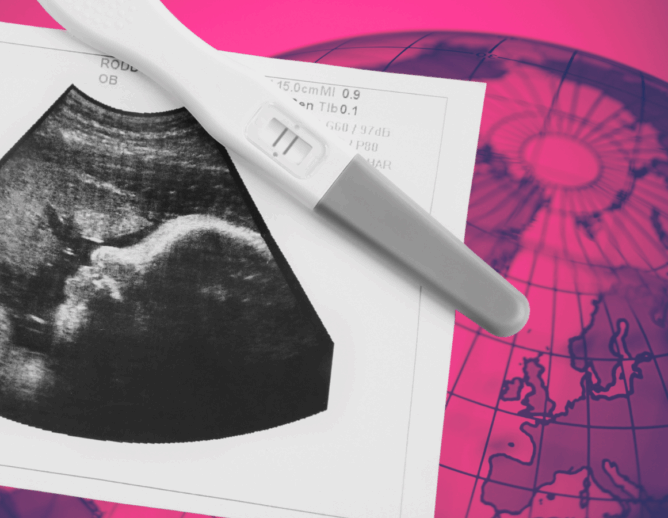

Yesterday, the United Kingdom voted to decriminalize abortion. In a 185-145 vote, the British House of Lords approved an amendment reforming a Criminal Code provision that regulates abortion in England and Wales. In the face of a recent uptick in prosecutions for miscarriages, stillbirths, and self-managed abortions, lawmakers have undertaken efforts to prevent women from being investigated, arrested, prosecuted, or imprisoned for terminating their own pregnancies.
The United Kingdom’s reform is part of a broader movement away from relying primarily on criminal law to regulate abortion care — a stark contrast to the vast expansion of criminal abortion laws in the U.S. in the wake of the Dobbs decision.
Abortion Law in the United Kingdom
The United Kingdom has taken incremental steps towards the full decriminalization of abortion over the past 60 years. The 1967 Abortion Act, for instance, decriminalizes abortion through the 24th week of pregnancy if two doctors certify that continuing the pregnancy poses a risk to the life or health of the pregnant person. Abortion is also permitted under certain circumstances after that point in the pregnancy.
Abortion, however, has remained a crime under all other circumstances in the United Kingdom since 1861 until now. Moreover, women suspected of terminating their pregnancies under these circumstances could and did face penalties of up to life imprisonment under other criminal provisions, namely the Offences Against the Person Act (OAPA) and the Infant Life (Preservation) Act (ILA).
In June, the House of Commons considered several proposed amendments to the U.K. abortion law. Stella Creasy, a Member of Parliament, introduced a proposal calling for the full decriminalization of abortion, which would repeal relevant sections of the OAPA and the full ILA, as well as shield both abortion seekers and providers from criminal prosecution. Notably, the proposal also urged compliance with international human rights standards, reframing abortion as a matter of health care rather than criminal law. Ultimately, the House of Commons passed Tonia Antoniazzi’s, another Member of Parliament, proposal (p. 2), which amended the OAPA to clarify that “no offence is committed by a woman acting in relation to her own pregnancy.”
The House of Lords also considered several proposed amendments when it considered the bill in early 2026. It rejected several that would have undermined full decriminalization of abortion or otherwise made it more difficult to access in practice. However, it approved the proposal passed by the House of Commons and added a provision that expanded its scope — paving the way for women with criminal convictions for abortion-related offenses to be pardoned and for their personal data to be removed from police systems. The legislation now returns to the House of Commons for consideration of the retroactive pardon amendment.
Abortion Criminalization in a Global Context
At least 60 countries and territories have liberalized their abortion laws — whether through constitutional amendments, legislative reforms, or court rulings — over the past three decades. Nearly half of those countries, moreover, have reformed their laws to permit abortion on request. Few countries currently meet the criteria for “full decriminalization” of abortion, which generally refers to the removal of all criminal sanctions against abortion from a country’s criminal code. Even so, among countries that have reformed their abortion laws in recent years, an overwhelming majority have taken steps to incrementally broaden the scope of abortion decriminalization in their respective legal systems.
Countries like Ireland (2018), France (2024), and Luxembourg (2026) have recently amended their constitutions to increase abortion access, either by removing constitutional rights for prenatal life or adding an explicit right to abortion, respectively. Legislatures in other countries have reformed their laws to decriminalize abortion more broadly (e.g., New Zealand), through a specific point in the pregnancy (e.g., Argentina, Finland, Iceland, Uruguay), or under additional circumstances (e.g., Chile).
Judicial rulings have also played a critical role in decriminalizing abortion around the world. In recent years, some high courts have decriminalized abortion under certain circumstances (e.g., Ecuador). In a similar vein, others have decriminalized it broadly up to a certain point in the pregnancy (e.g., Colombia and Mexico). As part of their reasoning, many of these countries have utilized various well-established critiques of relying on criminal law to regulate abortion care. First, criminalization is inefficient because abortion bans do little to reduce abortion rates. Second, it is harmful, with global health and human rights experts documenting a wide range of harms caused by laws that criminalize abortion care. Countries have pointed to instances when abortion criminalization poses very real threats to patients’ lives, health, and well-being — with its negative consequences disproportionately affecting already marginalized women and people who can become pregnant.
Various high courts have linked the inefficiency and harm arguments to the criminal and constitutional law principle of ultima ratio (or “minimal intervention”) to strike down abortion bans. The principle of ultima ratio recognizes that criminal law is among the harshest tools at the state’s disposal to exert control over individuals and requires that it be used only as a last resort to achieve a legitimate governmental purpose. Furthermore, the criminal provision must be effective, reasonable, and proportionate. High courts in various countries, including Colombia and Mexico, have held that the legislature should exhaust less restrictive and more effective means of regulating abortion before resorting to punitive measures.
United States as a Global Outlier
A handful of countries have bucked the global trend towards greater abortion decriminalization. In the past 30 years, five countries have either decreased the legal grounds on which pregnant people can access abortion services or the gestational limits for abortion.
In the United States, the Supreme Court’s overturning of the federal right to abortion in Dobbs “opened the door to the vast expansion of criminal abortion laws” at the state level, which has also led to states passing numerous total or near-total abortion bans in 2022. Since then, lawmakers in several states have introduced legislation that would specifically target those seeking abortions through abortion bans or other criminal laws, thereby expanding the scope of criminalization. During the 2025 legislative session alone, numerous states — such as North Dakota, Oklahoma, and South Carolina — considered bills that would subject people who receive abortions to murder or manslaughter charges or remove the exemption for abortion seekers from their state’s abortion ban. These bills not only directly contradict professional medical standards and threaten the rights of pregnant people, but also buck the worldwide trend towards decriminalization of abortion.
The United Kingdom’s landmark legislation highlights a path forward for countries that have successfully decriminalized abortion under certain timeframes and circumstances, but have yet to achieve “full decriminalization.” As stressed by international experts like the World Health Organization and the International Commission of Jurists, full decriminalization involves ensuring that no criminal offense applies to abortion care. By clarifying that no offence can be “committed by a woman acting in relation to her own pregnancy,” the United Kingdom’s recent reform meets that threshold. Moreover, the United Kingdom’s efforts serve as a powerful source of inspiration for advocates and decision-makers in the United States and elsewhere — particularly those exploring new avenues to challenge the world’s historical reliance on criminal law in regulating abortion care.
This Expert Column builds off of the O’Neill Institute and State Innovation Exchange’s “Beyond Borders: Bringing Abortion Law and Policy Experiences Around the World to the United States” report series. For those interested in learning more about how the United States compares to the rest of the world in the context of abortion criminalization, please read the “Critiques of Abortion Criminalization” report.