

Kourtney Mydlowski

She pushes her hair behind her ears, leaving only a few loose strands framing her face. She fastens her oversized pajama pants tightly around her waist and tucks in her oversized t-shirt for extra support. She is ready to go.
Moving quickly and quietly through the house, cracking a giggle or two, she makes her way to the kitchen. She opens the refrigerator door and gathers the essentials for the perfect midnight snack: a jar of pickles, salami and cheese, and two bottles of water. Balancing everything in her arms, she makes a run for it.
I wait for her at the bedroom door.
Mission accomplished.
Years later, that memory remains vivid. It is one of many that come rushing back whenever I think about Audrey. I remember her laughter, her sense of adventure, and the countless moments that seemed ordinary at the time but have since become priceless.
Those memories flooded my mind on February 7, 2021, when I received the phone call that changed my life. That was the day I learned that my childhood best friend, Audrey, had lost her battle with addiction.
Like many childhood friendships, ours was built on countless small moments that seemed insignificant at the time. Endless sleepovers, inside jokes, late-night conversations about the future, and adventures that felt larger than life when we were kids. Audrey had a way of making people laugh and making them feel comfortable just being themselves. When I think of Audrey, those are the memories that come to mind.
I learned of Audrey’s overdose while I was studying for the LSAT (Law School Admission Test) and beginning my journey towards law school. The news was completely devastating. In the years that followed, I found myself wrestling with my own what-ifs and questions that extended beyond my own grief. Why were so many families experiencing the same loss? What could be done differently? How can policy better support prevention, treatment, recovery, and the people left behind?
In my second year of law school at Elon law, all students are required to complete a ten-week residency. I chose to participate in what is known as the “Fall Match.” Through this process, students submit their top five residency placements and are later notified of potential matches and interviews. It was through the Fall Match that I discovered the O’Neill Institute’s Center on Addiction and Public Policy.
Unsurprisingly, the Center on Addiction and Public Policy was one of my top five choices. Before submitting my resume and letter of interest, I paused and spoke to Audrey as if she was sitting right beside me. Although she was no longer physically present, I felt her presence all around me. I told her that I was applying for an opportunity that would allow me to contribute toward the kind of change that is so desperately needed in today’s fight against addiction.
Not long after applying, I had an interview with the O’Neill Institute and was invited to be their resident for the spring trimester. As I settled into my work, I quickly realized that this opportunity was more than just another law school requirement, it was a chance to contribute to a field that had become deeply personal to me. One of the major projects I contributed to focused on Alcohol Use disorder, commonly referred to as “AUD.” Every time I saw the acronym, I thought of Audrey, as she went by various nicknames, mainly “Aud.” What began as a professional assignment became a daily reminder of why this work matters and I knew that I was right where I was supposed to be.
When people hear that someone died from an overdose, the addiction often becomes the first thing they know about that person. For me, Audrey was never her addiction. She was the girl sneaking midnight snacks, making everyone laugh, and turning ordinary moments into memories that would last a lifetime. That is why it is difficult when someone is reduced to the circumstances of their death. The person that they once were–the daughter, friend, sister, and loved one–can disappear behind the labels and stigmas that follow addiction. Audrey, like so many others, deserve to be remembered for more than the addiction she struggled with.
Today, I carry a small symbolic “222” angel number tattoo in Audrey’s memory. It serves as a reminder of our friendship, the impact she had on my life, and my belief that, in some way, she is still with me every day.
A Mother’s Love and Loss
When I asked Audrey’s mother, Kristine, what she wanted people to know about Audrey, she did not begin by talking about her addiction. She began by talking about who Audrey was. Many of the qualities and memories Kristine shared echoed the Audrey I was fortunate enough to know growing up.
To Kristine, Audrey was funny, intelligent, adventurous, and deeply loving. “She had the best sense of humor,” she told me. “Her laugh was contagious!” Audrey loved trying different foods, doing her make-up and hair, taking selfies–often trying to teach Kristine how to perfect the art of a selfie, and spending time with the people she loved. She cared deeply for others, often checking in on family, writing heartfelt Facebook posts, and never missing an opportunity to tell someone she loved them.
Kristine also described Audrey as remarkably intelligent, even if she did not recognize it herself. “Audrey took her GED test and passed without taking any classes,” Kristine recalled. “She never gave herself enough credit for being so smart. She would have gone very far if not for the disease of addiction.”
For Kristine, addiction was never a moral failure. The stigma surrounding addiction remains one of the most painful aspects for many families. As Kristine explained, “People see addiction as a moral failure, but it is a disease intertwined with trauma and mental illness.”
Addiction is often misunderstood by those who have never experienced it firsthand. “When people struggle with addiction, they are fighting for survival,” she explained. In her view, many people fail to recognize the physical and emotional suffering that accompanies substance use disorder. As she put it, “Without the drug, they are sick, and everything they are trying so hard to suppress, is coming to the surface.”
There is a deep connection between addiction, trauma, and mental health. Kristine’s experience also highlighted what she sees as a significant gap in the treatment system: the lack of programs equipped to address trauma, mental health, and substance use disorders simultaneously. “Audrey’s addiction was trauma-based,” she explained, noting that, “there are very few rehabs that truly specialize in both trauma and mental illness, even though many claim to do so.”
Beyond the pain of watching her daughter struggle, Kristine also faced the judgment and stigma that often accompanies addiction. “I have had people say horrible things to me. That I was a bad mother, that Audrey was a junkie.” Yet she wants people to understand that families are often doing everything they can, “I have made a thousand mistakes trying to save my child, but not one was done maliciously. It was done out of love and desperation.”
Despite Audrey’s struggles, Kristine, had moments of hope for her daughter’s sobriety. During a period of sobriety in 2018 and 2019, Audrey was able to enjoy meaningful time with her family, including a cruise they took. Audrey’s fiancé Dan also was able to attend, making it extra special. Kristine recalls that Audrey discovered a small restaurant on one of the islands and insisted on ordering for everyone. “I was not that adventurous with food,” she admitted, “but she ordered our food and it was excellent!” These memories remind her that Audrey’s life was so much bigger than her addiction.
Looking back, Kristine believes that meaningful change requires more than just treatment alone. She wishes there were more psychiatric-based programs for young people and treatment centers that focused on healing rather than profit. She further emphasized the need for stronger aftercare services, noting that the medications prescribed during treatment are often difficult to obtain after leaving the treatment centers and safe, aftercare living facilities need to be state certified.
The hardest part for Kristine was watching her daughter slowly disappear.
“I watched my child slowly slip away in the end,” she said. “One piece at a time, while I was helpless to stop it.”
Today, her message is simple: addiction and mental illness deserve compassion, not judgment. “If people would listen to every addict’s story of why it began, it would break your heart,” she said. “They are sick. This country is losing a war, one person at a time. These are young people, and they mattered.”
Audrey mattered. As Kristine shared her memories, one truth became clear: Audrey’s story cannot be reduced to the way it ended. It must also be remembered through the way she lived and the way she continues to live on in the hearts of those who loved her.
The Bond Only Sisters Share
Although I was fortunate to call Audrey one of my best friends, no one knew her quite like her sister. To gain a deeper understanding of Audrey’s life, I felt it was important to include her sister, Jordan, to share the memories and qualities that continue to shape the way she remembers Audrey today.
When asked what memory best captured Audrey, Jordan found it impossible to choose just one. “Audrey was goofy, fierce, compassionate, and she made it clear that she deserved everything and anything she desired,” she said. Those qualities revealed themselves in countless ways. Audrey’s goofy side emerged during our late-night sleepovers. One night, Audrey and I thought it would be funny to place bologna on Jordan’s face as a prank after she decided to become a vegetarian. On other occasions, Audrey and Harmony would spend countless hours photoshopping pictures, making everyone laugh at their creative ideas.
Her sister recalled Audrey’s fierce loyalty whenever someone she loved was hurting. She said, “I’ve seen her fierce when grabbing the phone as I was getting broken up with and threaten the person who was making me cry.” She always defended and stuck up for those closest to her. Audrey’s compassion extended beyond just the people she loved, often also rescuing animals that others may have overlooked or abandoned.
Among her favorite memories were days spent paddling down the river with Audrey and their honorary sister, Emily. They would spend hours gossiping, laughing, and escaping from the pressures of everyday life. Every so often, a floating log would catch their attention, prompting Audrey to jokingly ask, “Is that a gator log?” The phrase still brings a smile to her sister’s face and serves as a reminder of the joy Audrey brought to ordinary moments.
When asked what Jordan misses the most about Audrey, her answer was immediate:
“Her laugh. I can still remember it to this day, loud and clear every time I think about it. It was contagious, and it was one of the best parts about her.”
When asked, what she wished people understood when they hear that Audrey died from an overdose, her response highlighted both the depth of sibling loss and the stigma that often surrounds addiction. She explained the relationship between siblings are often the longest human connection a person will have. Losing Audrey left “a hole in my heart the size of every memory I have ever had with her.” While there were periods when addiction made it feel as though she was losing her sister long before her death, the overdose was still sudden, devasting, and life changing. Jordan often found herself wondering how differently people might react if she told them Audrey had died in a car accident rather than from substance abuse. Regardless of the cause, she emphasized that Audrey’s death was not something she wanted or deserved.
“Her overdose wasn’t something she was asking for, and it is just as unexpected and devastating as anyone else losing their life. Her loss changed me entirely: cognitively, spiritually, and physically.”
Despite her loss, Audrey’s sister hopes that sharing Audrey’s story can help others. “I hope sharing Audrey’s story can not only shed light on the humans behind the mask of addiction but can also reach those who are struggling with addiction and let them know they are loved and not alone.” She further stated that she hopes that people who are struggling understand that even when relationships become strained, they are still deeply loved by those around them. she further emphasized the world is a better place with them in it, especially when they are happy, healthy, and able to be themselves.
Lastly, I asked Jordan what she would tell Audrey if she had the chance. Her answer was simple but powerful:
“That I love her. That I was always proud of her even when I didn’t show it.”
Those words serve as a reminder that addiction never diminished Audrey’s worth, nor the love that surrounded her. To her sister, Audrey will always be remembered for her laughter, loyalty, compassion, and the countless memories that continue to live on in all of us.
In 2023, on average, 217 people died each day from an opioid overdose. That year, drug overdoses claimed the lives of approximately 105,000 people in the United States, with nearly 80,000 of those involving opioids. Synthetic opioids, particularly manufactured fentanyl, remain the leading driver of overdose deaths nationwide. Although recent data shows encouraging progress, with overdose deaths declining significantly by 26% between 2023 and 2024, the crisis is far from over.
For those who are struggling with substance use, please know that you are not alone. Addiction is not a moral failing, nor is reflection of your worth. Help is available, and recovery is possible. If you or someone you know is struggling with substance use, support can be found through treatment providers, community organizations, and the Substance Abuse and Mental Health Services Administration (SAMHSA) National Helpline at 1-800-662- HELP (4357), a free and confidential service available 24 hours, 365 days a year.
Audrey’s story is deeply personal to those who loved her, but also a part of a much larger crisis affecting families across the United States every day. Behind every overdose statistic is a person with dreams, talents, relationships, and a life that mattered. These losses remind us that addiction does not discriminate. It can affect anyone–regardless of their background, family, accomplishments, or the love that surrounds them.
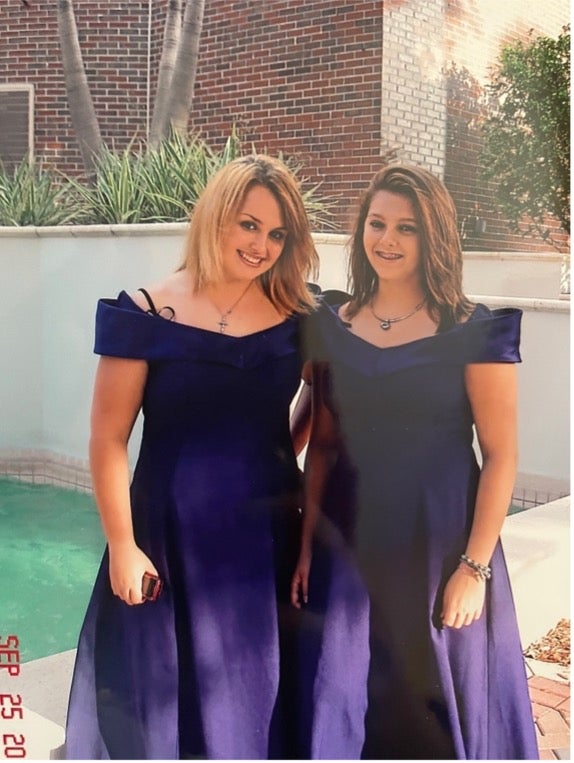
My hope is that Audrey’s story does more than raise awareness. I hope it encourages compassion, challenges stigma, and reminds us that every person struggling with addiction deserves dignity, respect, and access to meaningful support.
Audrey, you are missed more than words can express. Your story continues to inspire me, and your memory continues to guide and fuel my passion to contribute to combating addiction. I hope that by sharing your story, others may find hope, understanding, and the courage to seek help.
Love,
Your Forever Friend,
Kourtney